From waste to value: reducing and recycling with purpose

Component content
We are committed to responsible waste management through reduction, reuse, recycling, and recovery, aiming to cut waste intensity 15% by 2030.
With approaches based on reducing, reusing, recycling and recovering, we aim to reduce waste for disposal generation by 15% per tonne of product by 2030.
We reduce the amount we create as a by-product of our processes, we reuse where possible and we recycle to avoid disposal via landfill or incineration. Where waste is incinerated, we aim to recapture the energy.
At our Vernier site, for example, our manufacturing processes generate waste sent to incineration every year. Reducing this amount would help us ensure that we meet our goals.
Prioritising initiatives
Component content
Prioritising initiatives
To prioritise initiatives, the local team in Vernier drew up a waste register allowing them to identify both which fragrance ingredients generate most incinerated waste and the ratio of waste produced per kilogram of product. Using this information, they were able to collaborate with production and industrialisation chemists to optimise processes and identify ways of reducing the quantities of waste sent for incineration. Two initiatives stand out as being particularly effective.
Reducing waste
Component content
Reducing waste
The first initiative targeted aqueous waste from the production of a fragrance ingredient. While this waste has traditionally been managed through off-site incineration, our local team conducted laboratory tests to find the proper conditions for this waste to be effectively biodegraded in our wastewater treatment plant. Eliminating this incineration allowed us to cut manufacturing costs, free up storage space on site and reduce the number of truck journeys needed to evacuate waste.
The second initiative involved significant quantities of solid and liquid waste coming from the production of another fragrance ingredient. Process optimisation allowed us to significantly reduce waste coming from the synthesis process, cutting waste intensity to 1.6 kilograms of waste per kilogram of ingredient from 7 kilograms of waste before. These two initiatives alone led to a reduction of 394 tonnes of incinerated waste and 1430 tonnes of CO2 equivalent saved (scope 3). Overall, we decreased waste intensity by 24% from 2020 to 2024 at the site, already exceeding the 15% reduction target set for 2030.
Bedford Park’s composting breakthrough
Component content
Bedford Park’s composting breakthrough
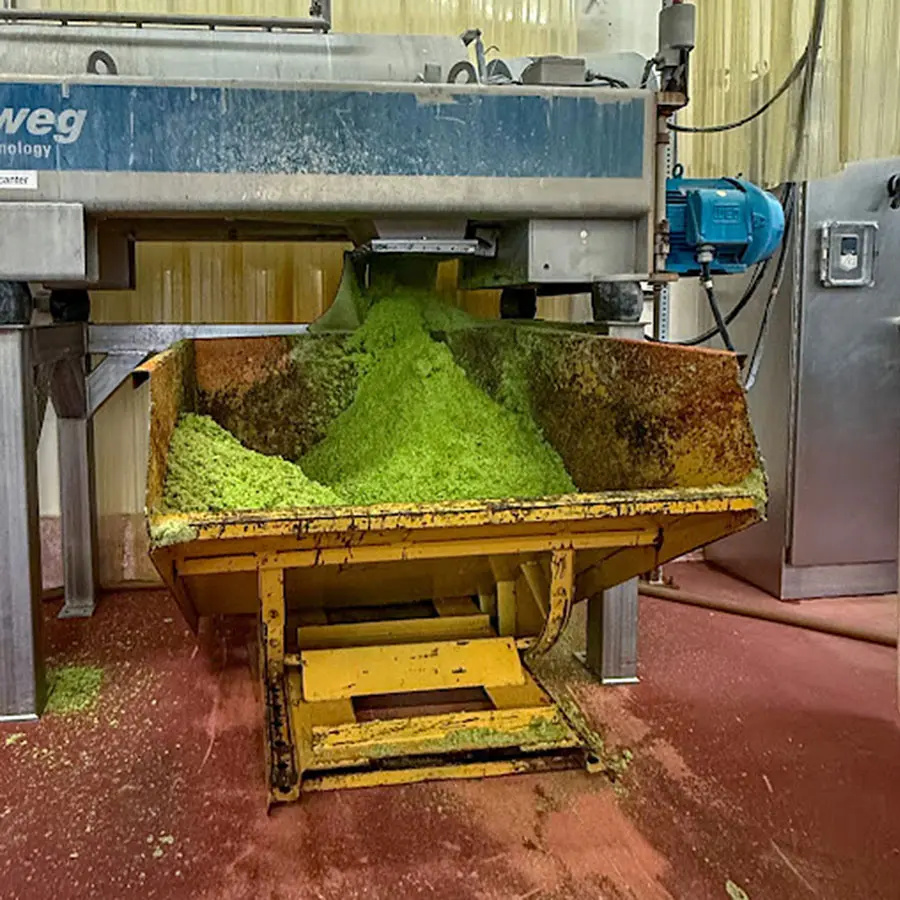
At Bedford Park, Illinois, USA, our team found an innovative use for the pomace scraps that are the by-products of producing fresh purees, filtered or concentrated juices, diced blends, fire‑roasted vegetables and dry powders from fresh fruits and vegetables. Traditionally, these organic scraps were compacted and sent to landfills.
In partnership with a provider of sustainable recycling and waste solutions, the site devised a scheme to better capture the pomace, store it in covered composting dumpsters that protect the material from rain and pests and, ultimately, convert the vegetable juice extraction residues into a valuable soil-enriching product.
Using training, clear communication and cross‑department teamwork, composting became the default, and all organics were diverted away from landfill compactors.
The initiative ramped up through 2024, diverting 270 tonnes of waste. By 2025, the programme reached full effectiveness, with 932 tonnes successfully directed to composting.
Finding a circular, lower‑carbon treatment for this by‑product is an example of how we embed sustainability into site master plans, reviewing waste streams with a fresh perspective.