Empowering farmers and peelers in Sri Lanka’s cinnamon supply chains

Component content
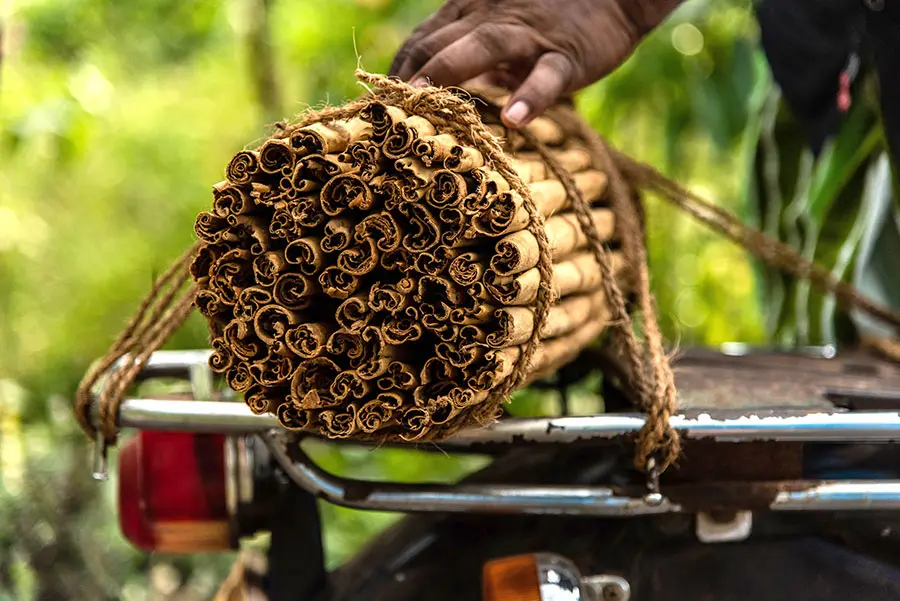
Ceylon cinnamon (Cinnamomum zeylanicum), recognised internationally as ‘true cinnamon,’ is indigenous to Sri Lanka and distinguished by its fine texture, delicate sweetness, and refined aroma.
These cherished qualities depend on the skill and dedication of cinnamon farmers and peelers, who play a crucial role in maintaining the quality and sustainability of the cinnamon value chain.
They also face considerable challenges, however, including labour‑intensive manual processing, low daily output, and limited income. These factors restrict earning potential and reduce the efficiency of cinnamon harvesting, impacting both quality and yield. In parallel, cinnamon cultivation is increasingly affected by environmental pressures – such as soil degradation, erosion, and biodiversity loss linked to conventional monoculture practices. Moreover, growing climate variability and unpredictable weather patterns pose risks to the long‑term sustainability of production. Safeguarding this vital crop therefore means protecting both the land and the communities it sustains.
In August 2025, as part of ongoing efforts to strengthen key human rights principles and promote environmentally responsible cultivation, Givaudan, in partnership with Verger Naturals, launched a one‑year initiative to improve conditions in the cinnamon supply chain.
Cinnamon-rubbing machines to ease labour
Component content
Cinnamon-rubbing machines to ease labour
Through the project, we are distributing 75 cinnamon-rubbing machines – ensuring one machine for every two peelers – to improve processing efficiency, reduce physical strain, and boost the earnings of cinnamon peelers.
Environmentally and socially responsible cinnamon cultivation
Component content
Environmentally and socially responsible cinnamon cultivation
To enhance awareness and adoption, farmers receive training on sustainable farming techniques, soil health, organic practices, and ecosystem conservation. Training programmes also cover key human rights themes, including the prevention of child labour, forced labour, discrimination, and workplace violence.
To support farmers in replanting vacant field areas, 10,000 high‑quality seedlings are being distributed along with expert technical guidance to boost land productivity and ensure the long‑term viability of cinnamon cultivation.
Supporting farmers and peelers to improve earnings
Component content
Supporting farmers and peelers to improve earnings
As part of this project, we are conducting earnings assessments to measure the potential impact of new tools, training, and cultivation practices on productivity and income for peelers and farmers. These assessments also seek to determine living income levels, identify any existing gaps, and explore additional income-generating opportunities beyond the project’s initial scope.
Involving local experts and university teams in continuous project monitoring ensures transparency and accountability while giving beneficiaries a voice in the process.
With these objectives, the project serves to promote sustainable livelihoods and strengthen the resilience of rural communities, reinforcing our commitment to uphold human rights and advance responsible sourcing practices that respect people and nature across our global supply chains.